Why Runners Are Switching to Open-Ear Headphones Outdoors
The noise-isolating earbuds that make gym workouts immersive become a genuine hazard the moment you take them outside, because they seal you off from traffic, cyclists, and everything approaching from behind. That is why more outdoor runners are switching to open-ear and bone-conduction designs. Here is the safety problem with sealed earbuds outdoors, how open-ear headphones solve it without giving up your music, and how to think about audio awareness on the roads and trails.

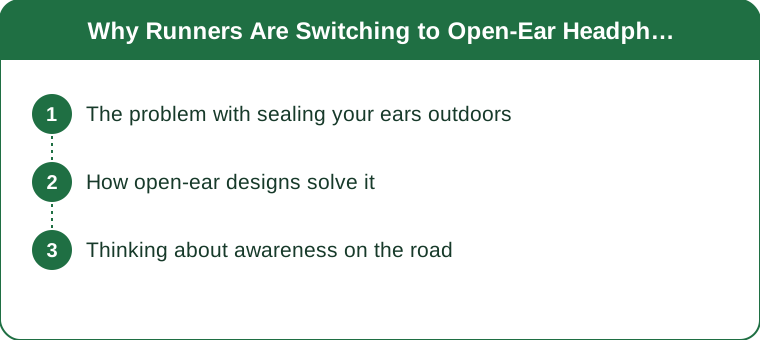
The problem with sealing your ears outdoors
Sealed earbuds, especially with active noise cancellation, are designed to block out the world, which is wonderful on a treadmill and dangerous on a road. Outdoors, your ears are a primary safety sense: they warn you of an approaching car, a cyclist calling out, a dog, or footsteps behind you on a quiet trail. When you seal them off and add music, you lose that early warning entirely, and plenty of near-misses and worse come down to a runner who simply never heard the danger coming. The immersion that helps indoors actively works against you outside.

How open-ear designs solve it
Open-ear and bone-conduction headphones deliver your audio while leaving your ear canals open to the world. Bone-conduction models sit on your cheekbones and transmit sound through vibration, while other open-ear designs hook near the ear without plugging it. Either way you hear your music and your surroundings at the same time, so you keep the motivation of a soundtrack without going deaf to traffic. The sound quality is a step below sealed earbuds, particularly on bass, but for outdoor running that is a trade most people happily make for staying aware and safe.
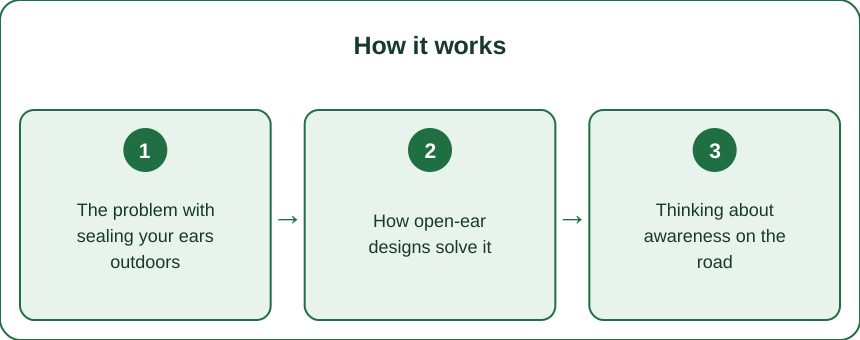
Thinking about awareness on the road
Whatever you wear, treat your hearing as part of your safety kit outdoors. Keep the volume low enough that you can still hear a car or a shouted warning, and consider running with only one earbud in if you stick with sealed models near traffic. Stay especially alert at intersections and on shared paths where cyclists pass fast and quiet. The goal is not to give up music but to keep enough of your hearing available to react. Open-ear headphones make that easy, which is exactly why so many outdoor runners have switched.
The headphones that immerse you at the gym can genuinely endanger you outdoors, where your ears are an early-warning system for traffic, cyclists, and anything approaching from behind. Sealing them off with noise-canceling earbuds removes that warning at the worst possible time. Open-ear and bone-conduction designs solve the problem cleanly, giving you your music while leaving your ears open to the world, at the small cost of a little sound quality. Keep the volume moderate and stay alert at crossings regardless of what you wear. Staying aware is not the enemy of enjoying a run; it is what lets you keep taking them.
Keep Reading
This article is for general informational and styling purposes only. Fit, sizing, and product availability may vary.