Training in Silence: Why More Athletes Are Ditching the Playlist Mid-Workout
Quick Answer: Silent training improves interoceptive awareness — your ability to sense breathing, form, and effort level in real time — which is why lifters chasing technical precision often drop music on heavy sets. For pure endurance or high-rep conditioning work, music’s distraction effect still measurably helps you push longer.
Walk into any serious lifting gym and you’ll see it: someone stripping their headphones off right before a heavy set, then putting them back on between sets. That’s not inconsistency — it’s a deliberate trade-off between two different tools for two different jobs.

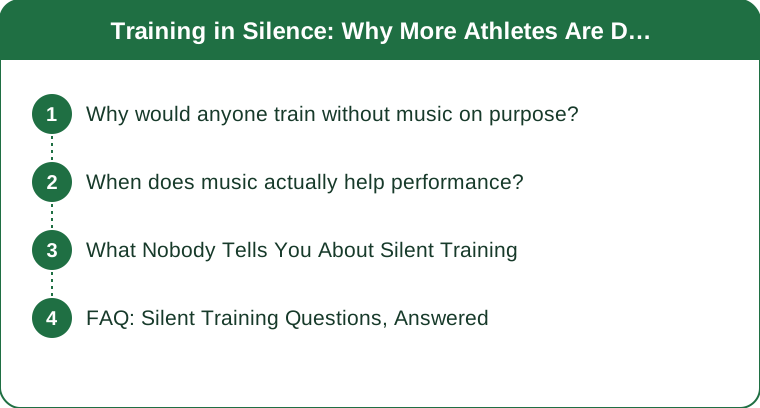
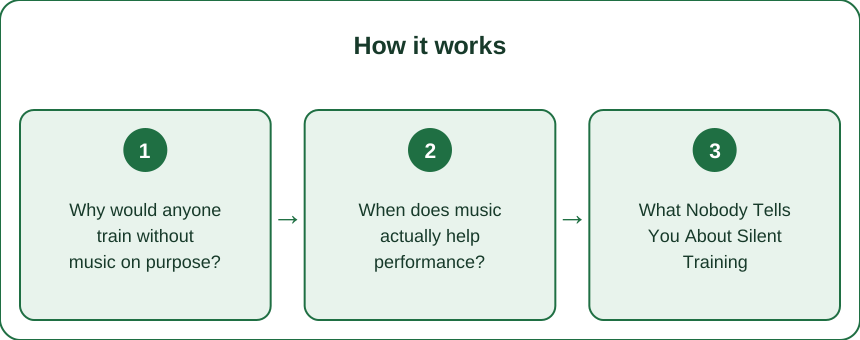
Why would anyone train without music on purpose?
Because music is a distraction tool, and distraction is only helpful when the task benefits from not paying full attention to discomfort. On a heavy squat or deadlift, you need the opposite — full attention to bar path, breath, and bracing. Music competing for that attention can cost you the small technical adjustments that prevent injury and improve output.
Athletes who train in silence on technical lifts report better real-time awareness of form breakdown — catching a shifting knee or a rounding back before it becomes a bigger problem, rather than after.
When does music actually help performance?
For steady-state cardio, high-rep conditioning, and anything long and monotonous, music’s distraction effect is genuinely useful — it pulls attention away from rising discomfort and has been shown to extend time-to-exhaustion in endurance efforts. The louder and more rhythmically matched to your pace, the stronger that effect tends to be.
The rule of thumb that’s emerging: music for volume and endurance work, silence for max-effort technical lifts. Match the tool to what the set actually needs.

What Nobody Tells You About Silent Training
Here’s the surprising part: people who switch to silent training on heavy days often report the sets feeling harder, not easier — and that’s the point. Music was quietly making the effort feel more manageable by distracting from it. Without that buffer, perceived exertion rises even though actual output often improves.
That mismatch — feeling harder while performing better — is exactly why silent training takes real adjustment. It’s not more pleasant. It’s more effective for specific goals, and those aren’t always the same thing.
FAQ: Silent Training Questions, Answered
Should I train in silence all the time?
No — reserve it for heavy, technical, or skill-focused sets. Use music freely for warmups, conditioning, and high-volume accessory work where distraction genuinely helps.
Does silent training actually improve lifting form?
Indirectly — it improves your attention to form cues in the moment, which over time can translate to better technical consistency. It’s not automatic; you still need to know what to listen and feel for.
Is it distracting to have the gym’s ambient noise instead of my own music?
Some lifters find ambient gym noise less intrusive than expected once they adjust — others use earplugs (not music) to dampen noise while still cutting the distraction of a playlist.
TL;DR:
- Music distracts from discomfort — helpful for endurance, costly for technical precision
- Silent training improves real-time awareness of form on heavy sets
- Sets often feel harder without music even as performance improves — that’s expected
- Match the tool to the set: music for volume/endurance, silence for max-effort lifts
It’s not about which is better overall — it’s about which job you’re actually doing on a given set.
Keep Reading
This article is for general informational and styling purposes only. Fit, sizing, and product availability may vary.