The Complete Guide to Matching Music Genre to Your Training Type
Quick Answer: Different training types benefit from different music genres, not just different tempos — steady cardio pairs well with rhythmic, consistent-beat genres like EDM or pop, strength training benefits from high-energy or aggressive genres like hip-hop or rock, and mobility or yoga work generally performs better with minimal or ambient music, since genre affects motivation and pacing differently across training styles.
You’ve probably built a single workout playlist and used it for everything — cardio, lifting, cooldown. Research on exercise and music suggests that’s leaving real performance on the table.

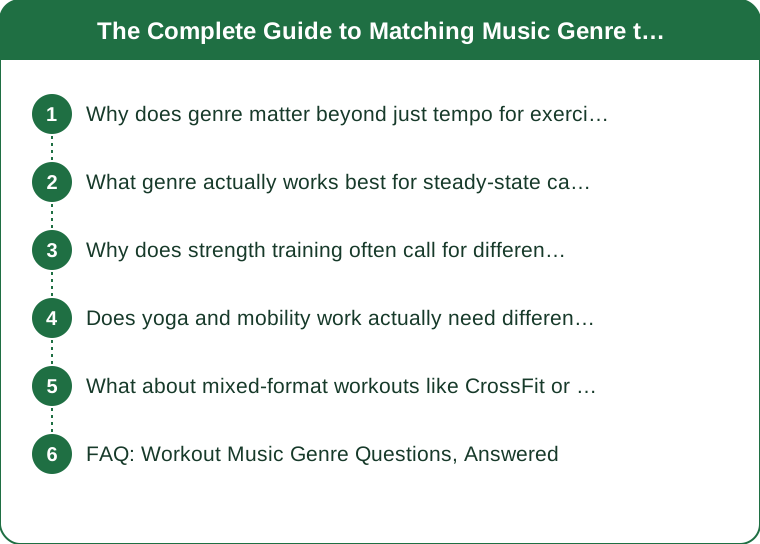
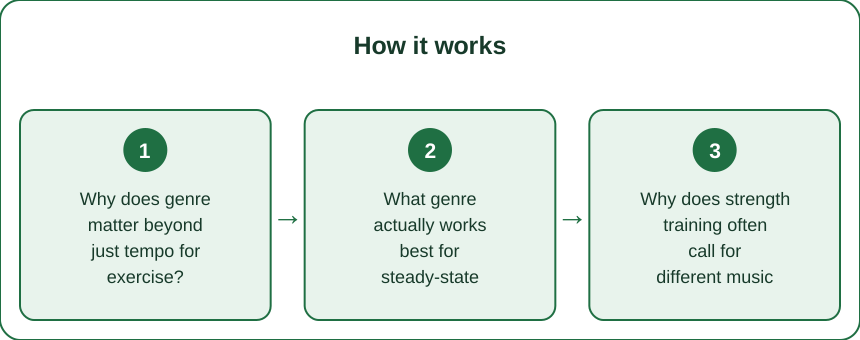
Why does genre matter beyond just tempo for exercise?
Tempo gets most of the attention in workout music advice, but genre carries its own psychological associations that affect motivation, perceived exertion, and even movement rhythm independent of beats per minute.
A fast-tempo classical piece and a fast-tempo hip-hop track can have nearly identical BPM but produce very different motivational responses — genre carries cultural and emotional associations that tempo alone doesn’t capture. This is part of why matching genre to training type is a distinct consideration from simply matching BPM to movement speed.
Research on exercise psychology has consistently found that music with strong rhythmic regularity and energetic characteristics — regardless of specific genre label — tends to reduce perceived exertion and increase work output during moderate-to-vigorous exercise. But different genres deliver that rhythmic energy through different sonic characteristics, which is where personal and training-type-specific preference comes in.
What genre actually works best for steady-state cardio?
For steady-state cardio — running, cycling, rowing at a consistent pace — genres with a strong, unwavering beat (EDM, pop, dance) tend to work well because they support a consistent movement rhythm without the tempo shifts many rock or hip-hop tracks include mid-song.
The consistency matters more than the specific genre label: a steady 140-150 BPM track in almost any genre can support pacing, but EDM and pop’s production style tends to maintain that steadiness more reliably across a full track than genres built around dynamic tempo shifts, breakdowns, or extended instrumental sections.
Some runners specifically seek out curated ‘running BPM’ playlists that filter by both tempo and genre consistency for exactly this reason — the goal is minimizing unexpected pace-disrupting shifts mid-session, not just picking energetic music generally.
Why does strength training often call for different music than cardio?
Strength training, especially near-maximal lifts, benefits less from continuous rhythmic pacing and more from short bursts of psychological arousal right before a heavy set — which is part of why hip-hop, rock, and aggressive electronic genres are common choices in strength-focused gym playlists.
The mechanism here is different from cardio’s pacing benefit: research on pre-lift music suggests that high-arousal genres can measurably increase power output and perceived readiness in the seconds before a heavy lift, likely through a combination of psychological priming and genuine physiological arousal effects.
Unlike cardio, strength training’s rest periods between sets create natural breaks where genre-driven arousal can reset and rebuild — meaning a strength playlist doesn’t need the same beat-to-beat consistency cardio does. Some lifters intentionally choose more aggressive, higher-energy tracks specifically for the final rep or two of a hard set, treating a genre shift mid-session as a deliberate arousal tool rather than a distraction.

Does yoga and mobility work actually need different music entirely?
Yes — for yoga, stretching, and mobility-focused sessions, minimal, ambient, or low-lyric-density music generally outperforms high-energy genres, since the training goal here (body awareness, controlled breathing, mental focus) is somewhat at odds with the arousal-boosting effect that helps strength and cardio work.
Heavily lyrical or high-tempo music during mobility work can pull attention away from proprioceptive awareness — noticing exactly where your body is in space — which is central to the actual training effect of this style of exercise.
Many yoga and mobility instructors specifically choose instrumental, ambient, or nature-sound-adjacent tracks for this reason, prioritizing a stable, low-arousal background over anything with the rhythmic drive that would help a cardio or strength session.
What about mixed-format workouts like CrossFit or HIIT?
Mixed-format training — HIIT circuits, CrossFit-style WODs — often benefits from genre flexibility matched to the specific phase of the workout rather than one genre throughout, since these formats alternate between cardio-dominant and strength-dominant demands within a single session.
Some athletes build playlists that intentionally shift genre with the workout structure: higher-tempo, consistent-beat tracks during cardio-heavy intervals, more aggressive or arousal-boosting tracks during strength-focused stations, and a cooldown shift toward calmer music as the session winds down.
This kind of structured genre-matching takes more playlist planning than a single continuous mix, but for people who train in these mixed formats regularly, it can meaningfully improve both perceived exertion during the hardest intervals and the mental transition into cooldown.
FAQ: Workout Music Genre Questions, Answered
Does lyric content in music actually affect workout performance?
Some research suggests motivational lyrics can add a small additional performance boost beyond instrumental characteristics alone, though the effect size is generally smaller than tempo and genre’s rhythmic properties.
Should you use the same genre for warmup and the main workout?
Not necessarily — many people find a gentler build in energy from warmup to main workout mirrors the physical warmup itself, rather than starting at peak intensity music immediately.
Can genre preference override the general recommendations here?
Yes, largely — while the patterns above hold up in aggregate research, personal genre preference and prior positive associations with specific music remain strong individual predictors of motivation, sometimes outweighing the general genre-matching guidance.
Is silence ever better than any genre for training?
For some technical strength work or highly focus-dependent training, silence or very minimal music can outperform any genre by removing a source of divided attention — this varies significantly by individual and task.
TL;DR:
- Genre affects motivation and pacing differently than tempo alone — they’re separate levers
- Steady, consistent-beat genres (EDM, pop) suit steady-state cardio’s pacing needs
- High-arousal genres (hip-hop, rock) suit strength training’s burst-based demands
- Minimal or ambient music suits yoga and mobility work’s focus-and-awareness goals
- Mixed-format workouts benefit from genre shifts that match each phase of the session
Next time you build a workout playlist, match the genre to the training type first — the tempo filter alone is only doing half the job.
Keep Reading
This article is for general informational and styling purposes only. Fit, sizing, and product availability may vary.