Why a Song's Key Affects Your Workout Energy as Much as Its BPM
Workout playlists get built almost entirely around beats per minute, matching tempo to running cadence or lifting rhythm. But the musical key underneath that tempo shapes perceived energy just as strongly, and a minor-key song at the same BPM as a major-key one tends to feel heavier and less motivating, even though the tempo numbers match exactly.

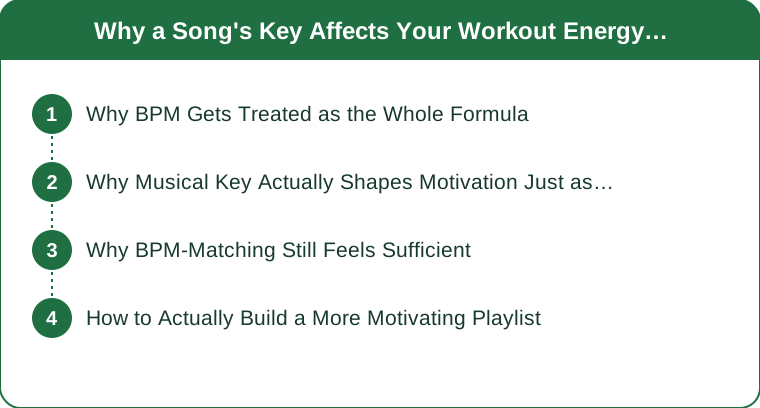
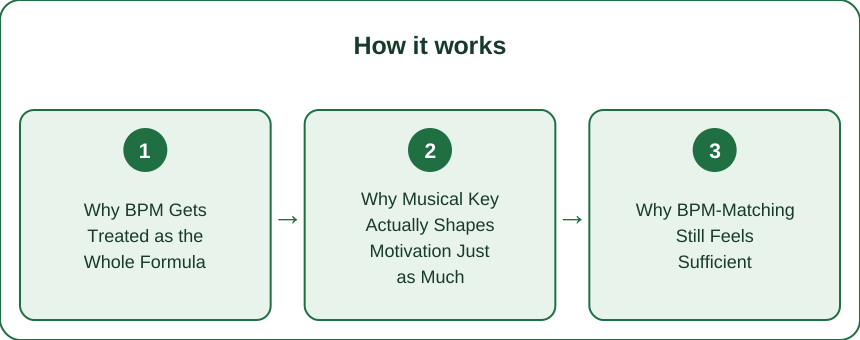
Why BPM Gets Treated as the Whole Formula
The measurable-metric bias: beats per minute being a single, easy-to-match number that can be directly compared to running cadence or a lifting tempo, which makes it feel like the complete science behind an effective workout playlist.
Why Musical Key Actually Shapes Motivation Just as Much
The perceptual layer underneath: major keys generally being perceived as bright, uplifting, and energizing, while minor keys read as heavier, more somber, or tense, regardless of tempo, meaning two songs at the identical BPM can produce noticeably different motivational effects purely based on which key they’re written in.

Why BPM-Matching Still Feels Sufficient
The overlap: two songs sharing the same BPM landing in a playlist together as an intuitively good match, since the physical pacing lines up, even when one is in a bright major key and the other in a moody minor key, producing a jarring emotional shift the tempo alone doesn’t predict.
How to Actually Build a More Motivating Playlist
The practical addition: checking a song’s key alongside its BPM when building a workout playlist, favoring major-key tracks for high-motivation moments like the last few reps or the final push of a run, and the frame (musical key shapes perceived energy as much as tempo does — pairing BPM with key, not tempo alone, is what actually builds a more motivating playlist.)
Workout playlists get built almost entirely around beats per minute, matching tempo to running cadence or lifting rhythm. But major keys are generally perceived as bright and energizing while minor keys read as heavier and more somber, regardless of tempo, meaning two songs at the identical BPM can produce very different motivational effects. Two songs sharing the same BPM feel like an intuitively good playlist match since the physical pacing lines up, even when one is bright and one is moody, producing a shift tempo alone doesn’t predict. Checking a song’s key alongside its BPM, favoring major keys for high-motivation moments, is what actually builds a better playlist.
Keep Reading
This article is for general informational and styling purposes only. Fit, sizing, and product availability may vary.