Lyrics or Instrumental? What Actually Helps You Push Harder
Quick Answer: Lyrical, high-tempo music tends to boost performance in steady-state, high-effort work like running or cycling by pulling attention outward. Instrumental or low-lyric music tends to help skill-focused or precision work like heavy lifting, where you need attention on your own body, not a singalong.
You’ve probably noticed it without naming it: a pump-up playlist makes a hard run feel shorter, but the same playlist during a heavy squat set feels distracting instead of motivating. That’s not random — it’s about where your attention needs to be.

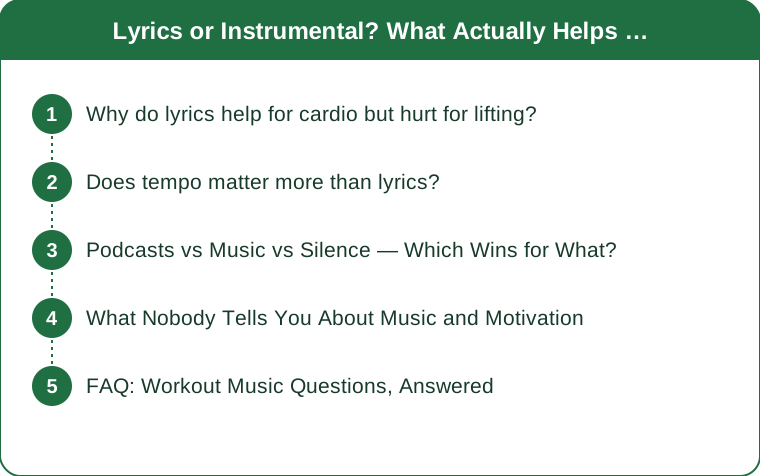
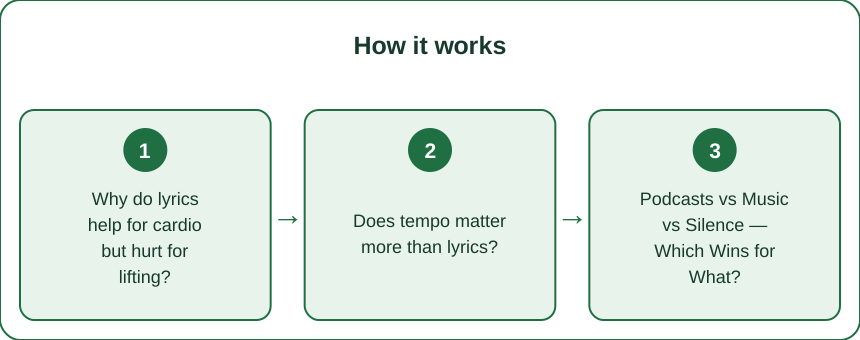
Why do lyrics help for cardio but hurt for lifting?
Because of what’s called an attentional dissociation effect — lyrics and vocal melody pull your focus outward, away from the discomfort of sustained effort. For repetitive, high-endurance work, that outward pull genuinely makes effort feel lower and pace feel more sustainable.
For a heavy lift, though, you need inward attention — bracing, bar path, joint position. A song with a hook mid-set can pull just enough focus away to cost you form, especially on a near-max rep.
Does tempo matter more than lyrics?
For steady-state cardio, tempo matters more. Music in the 120-140 BPM range consistently correlates with better pacing and lower perceived effort during running and cycling — with or without lyrics.
For strength work, tempo matters less than energy and predictability. A song you already know well (lyrics or not) works better than a new track, because your brain isn’t spending attention processing something unfamiliar mid-set.

Podcasts vs Music vs Silence — Which Wins for What?
Steady cardio (running, cycling, rowing): high-tempo lyrical music generally wins for perceived effort and pace consistency.
Heavy strength work: instrumental, low-lyric, or familiar music wins — attention stays inward where it needs to be.
Technical skill work (Olympic lifts, complex mobility): many people do best with silence or very minimal music — full attention is the actual performance enhancer here, and lyrics compete with the internal cues you’re tracking.
Long, boring cardio (a 45-minute incline walk): podcasts often outperform music entirely — mental engagement beats rhythm when the goal is just enduring the time.
What Nobody Tells You About Music and Motivation
The biggest performance gain isn’t from finding the ‘right’ genre — it’s from using music consistently as a pre-set cue. Athletes who play the same short intro track before their heaviest set report a measurable psych-up effect purely from association, regardless of the song’s actual energy.
The song becomes a trigger, not just a soundtrack. That’s a bigger lever than agonizing over lyrics vs. instrumental.
FAQ: Workout Music Questions, Answered
Is instrumental music actually better for focus?
For skill-heavy or max-effort work, yes — less lyrical distraction generally means better body awareness. For endurance cardio, lyrical music often wins instead.
What BPM is best for running?
Most runners find 120-140 BPM syncs naturally with a moderate cadence, though matching music tempo exactly to stride rate matters less than simply enjoying the track.
Should I listen to different music for warm-up vs. main set?
Many lifters do — higher-energy lyrical tracks to warm up mentally, then switching to familiar or instrumental tracks once technical sets begin.
TL;DR:
- Lyrical, high-tempo music helps steady cardio by pulling focus outward
- Instrumental or familiar tracks help heavy lifting and technical work by keeping focus inward
- Long boring cardio often does best with podcasts, not music at all
- A consistent pre-set ‘cue song’ beats obsessing over the perfect genre
Match the music to what the set actually demands from your attention — not just to what feels the most pump-up on paper.
Keep Reading
This article is for general informational and styling purposes only. Fit, sizing, and product availability may vary.