Is Your Workout Playlist Volume Quietly Damaging Your Hearing?
Quick Answer: Gym environments push people to listen louder than usual because ambient noise from equipment and other people forces you to compete with background sound — regularly exceeding 85 decibels for extended periods is where hearing damage risk begins.
You turn it up to drown out the clanging weights and the guy grunting three machines over. It works. It also might be quietly costing you more than you realize.
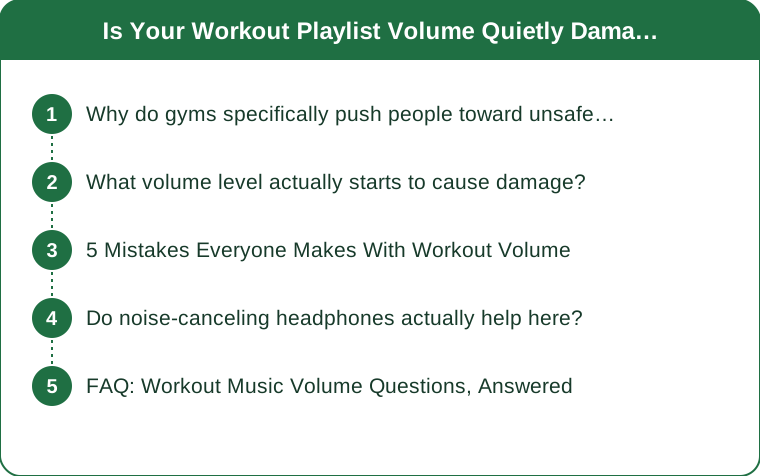
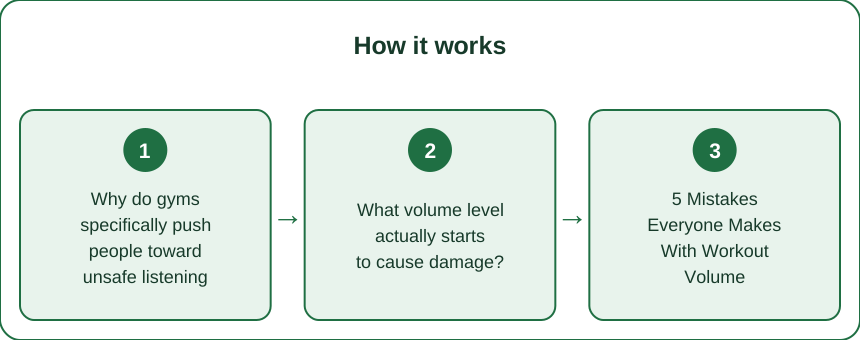
Why do gyms specifically push people toward unsafe listening volumes?
Because ambient gym noise regularly sits at 70-80 decibels already — from equipment, music over the PA, and other people — so headphone volume has to climb even higher just to be audible over it, often crossing into genuinely risky territory without you noticing.
This is different from listening at home in a quiet room, where the same volume setting would sound much louder and you’d naturally turn it down.
What volume level actually starts to cause damage?
Hearing health research generally points to 85 decibels as the threshold where extended exposure (8+ hours) starts risking damage — but the timeframe for safe exposure shrinks fast as volume increases, with 100 decibels only safe for about 15 minutes.
Most phone volume at 70-80% output, common for gym listening, can already sit in the 90-100 decibel range depending on your headphones, especially with in-ear buds that seal out ambient sound less than you’d think.
5 Mistakes Everyone Makes With Workout Volume
Mistake 1: Setting volume once and never rechecking it. As a workout intensifies, you often crank volume unconsciously to match your energy.
Mistake 2: Using headphones that don’t block outside noise well. Poor noise isolation means turning volume up just to compete with gym sound, not because you want it louder.
Mistake 3: Assuming in-ear buds are automatically safer than over-ear. Fit matters more than type — a poor seal on either style pushes volume up.
Mistake 4: Never taking listening breaks during long sessions. Continuous exposure over an hour-plus workout adds up differently than short bursts.
Mistake 5: Ignoring ringing or muffled sound after a workout. That’s an early warning sign, not something to shrug off.
Do noise-canceling headphones actually help here?
Yes, meaningfully — active noise cancellation reduces the ambient gym noise you’re competing against, which means you can listen at a genuinely lower volume and still hear your music clearly over the residual background sound.
This is one of the more practical fixes, since it addresses the actual cause (competing with ambient noise) rather than just asking you to will yourself to turn it down.
FAQ: Workout Music Volume Questions, Answered
How do I know if my workout volume is too loud?
If you can’t hear someone talking normally next to you while wearing your headphones, or your ears ring afterward, your volume is likely too high.
Is bone conduction headphone technology safer for hearing?
Bone conduction doesn’t eliminate risk but tends to encourage lower volumes since it doesn’t fully block ambient sound, which some people find naturally self-limiting.
Should I use a volume-limiting app during workouts?
It can help create a hard ceiling, especially useful if you know you tend to unconsciously increase volume as a workout intensifies.
TL;DR:
- Gym ambient noise pushes people toward louder, riskier headphone volumes without realizing it
- 85 decibels is roughly where extended exposure starts risking hearing damage
- Noise-canceling headphones reduce how loud you need to go to hear clearly
- Ringing or muffled hearing after a workout is an early warning sign, not normal
Your playlist should power the workout, not put your hearing at risk — noise-isolating headphones let you turn it down without losing the motivation.
Keep Reading
This article is for general informational and styling purposes only. Fit, sizing, and product availability may vary.